 Powered by
Because Asia is China’s immediate neighborhood, it is arguably the region in which major changes to US foreign policy and allied policy may have the most consequence and path dependency for the future of the international order. The government of the People’s Republic of China (PRC) makes clear its belief that it should be the dominant great power in Asia. The United States has maintained on a bipartisan basis that Asia should remain free and open (read: undominated by China), although the extent to which this remains a strategic priority is now in question.
The critical choices examined here will help to determine which major power’s objectives (or perhaps some messy combination thereof) are achieved, which in turn will be formative to whatever regional and global order is to come.
Competition vs. stabilization/accommodation
The primary choice facing the United States is the question of what it seeks to achieve and prevent with respect to China, and nowhere is this more critical or time sensitive than in Asia.
The United States appeared to be on course to continue its decade-long bipartisan consensus that China poses a profound challenge to numerous American security, economic, technological, and normative interests; in the past year the second Trump administration has demonstrated its interest in shorter-term trade and commercial agreements with the PRC, including at the expense of traditional national security issues, such as America’s semiconductor advantages and potentially Taiwan. Senior administration officials state they are pursuing an approach that seeks to stabilize great-power relations in the short term while honing America’s ability to compete in the medium and longer terms.
While plausible, this framing raises questions, including what might be sacrificed for the sake of short-term stabilization, and how these concessions may affect the United States’ longer-term capacity to compete.
While stability between great powers is a laudable goal, the PRC’s past efforts to define such arrangements have always implied sacrifices to longstanding US interests, and its latest gambit may be no different. While “comprehensive strategic stability” is barely defined, Chinese Foreign Minister Wang Yi’s exposition of the term gave many analysts pause when he stated that the United States and China had agreed to respect one another’s “core interests.” If taken literally, this would mean American deference to Chinese maritime and territorial claims in the East China Sea and the South China Sea, and over Taiwan, which would in turn come at the expense of American allies and longstanding US interests.
The question, then, is whether the United States should be thought of as pursuing stabilization defined by the absence of escalation in a China policy that otherwise remains keenly attuned to protecting allies’ security, our technology edge, and the nature of the order in Asia, or whether it is better thought of as stabilization by way of accommodation of Chinese interests and objectives. Subsidiary questions will emerge as this stabilization process continues. For example, should the United States be willing to make concessions to the PRC in exchange for gains that may contribute to stability, such as an AI safety dialogue, despite the fact that the PRC has its own interests at stake? Should the United States make concessions on technology export controls because those fit the PRC’s definition of stability?
The answer to these stability/accommodation questions, in turn, will help to determine allies’ approaches towards China in a period of geopolitical upheaval. Until now, Indo-Pacific allies have often insisted that they have “no Plan B” in the face of US unpredictability. In their minds, the cost of replacing American defense, intelligence, and other security support is prohibitively high. If it appears that the United States is accommodating Chinese interests at the expense of allies’, however, they will begin to diversify and will do so distinctly.
Australia and the Republic of Korea are more likely to inch closer to the PRC economically, though neither will return to their policies of a decade ago. Each would likely seek to retain alliance ties with the United States and would diversify its security ties. Japan, on the other hand, would be much less comfortable adopting a posture that accommodates the PRC so long as the LDP remains in power in its current form, and would be likely to accelerate its own defense investments to prepare for a Taiwan contingency and to protect the Senkaku Islands.
This state of affairs may invite miscalculation: if the PRC believes that it has mitigated the threat from the United States and reduced it with some of its allies but not others, Beijing may be more inclined to engage in opportunism against an American ally (i.e. Japan).
Approaching Taiwan
American and allied strategies for Taiwan will help to determine China’s posture towards the island and the future shape of the region.
While the “whither Taiwan?” question would always have intensified in the late 2020s, recent moves by both China and the United States have injected far more volatility into potential outcomes than seemed possible one year ago. After Xi Jinping’s intense purges of the PLA leadership of more than one hundred senior officers, few China military watchers believe that the PRC will be ready to invade Taiwan by 2027, and some assess that efforts may have been set back by several years. This presents, in theory, a window of opportunity for the United States to strengthen its deterrence posture in the region, including by recapitalizing Indo-Pacific munitions, augmenting force posture, and continuing to build out the deterrent coalition of countries in Europe and in Asia, delaying any action by Xi.
Given that China will begin to face real demographic and economic challenges in the 2030s, a gift of a few years could be the difference between a tenuous strait and a cataclysmic conflict.
However, the United States has injected considerable uncertainty into its own approach. President Trump’s statements that he is considering pausing arms sales to Taiwan at China’s behest and that he sees Taiwan as a bargaining chip with the PRC is already a dramatic change in American China policy, even before the outcome of the expected sale is officially known.
A US decision to pause or stop arms sales to Taiwan could have a profound impact on Taiwan’s fate. With numerous US packages already behind schedule and long delivery timelines for many articles, and Taiwan only just ramping up its own spending to the levels the United States has insisted upon with President Lai Ching-te’s supplementary budget, Taiwan must use the next two to three years to harden itself dramatically. If instead the United States withholds support, not only will Taiwan fall farther behind in its ability to defend itself but perceptions of alliance unreliability may also sap Lai’s shaky political support in Taipei. With no other arms supplier, such a pause could be of historic consequence.
While a full-scale Chinese invasion of Taiwan remains possible in the medium term, other scenarios are more likely sooner. Xi Jinping is already pursuing a strategy that aims to change Taiwan’s status through political interference. Capitalizing on alliance disillusionment in Taiwan among both elites and the public, Xi will likely focus energies on tipping the 2028 Taiwan election in favor of the KMT party, including through unprecedented levels of disinformation and election interference, with an eye to electing a president more favorable to the mainland. Should political change itself be insufficient, the PRC may attempt a range of economic measures, beginning with well-trodden territory like import bans and travel restrictions. On the higher end, the Chinese could pursue something like an administrative quarantine or full blockade to strangle Taiwan economically and try to demonstrate to Taipei the limits of allied support.
It is worth noting that some of these dynamics are not new: the Chinese have often attempted to interfere with American Taiwan policy and have long seen the next Taiwan election as critical to the question of whether they were making progress towards unification. But the confluence of three critical factors—Taiwan’s 2028 election, newfound US flexibility on Taiwan policy, and Xi’s opportunity to make progress on Taiwan— suggests a newly dangerous set of dynamics. What’s more, the growing importance of the Taiwan Semiconductor Manufacturing Company (TSMC) to the United States’ AI advantage means that its cross-strait stakes are actually growing with time.
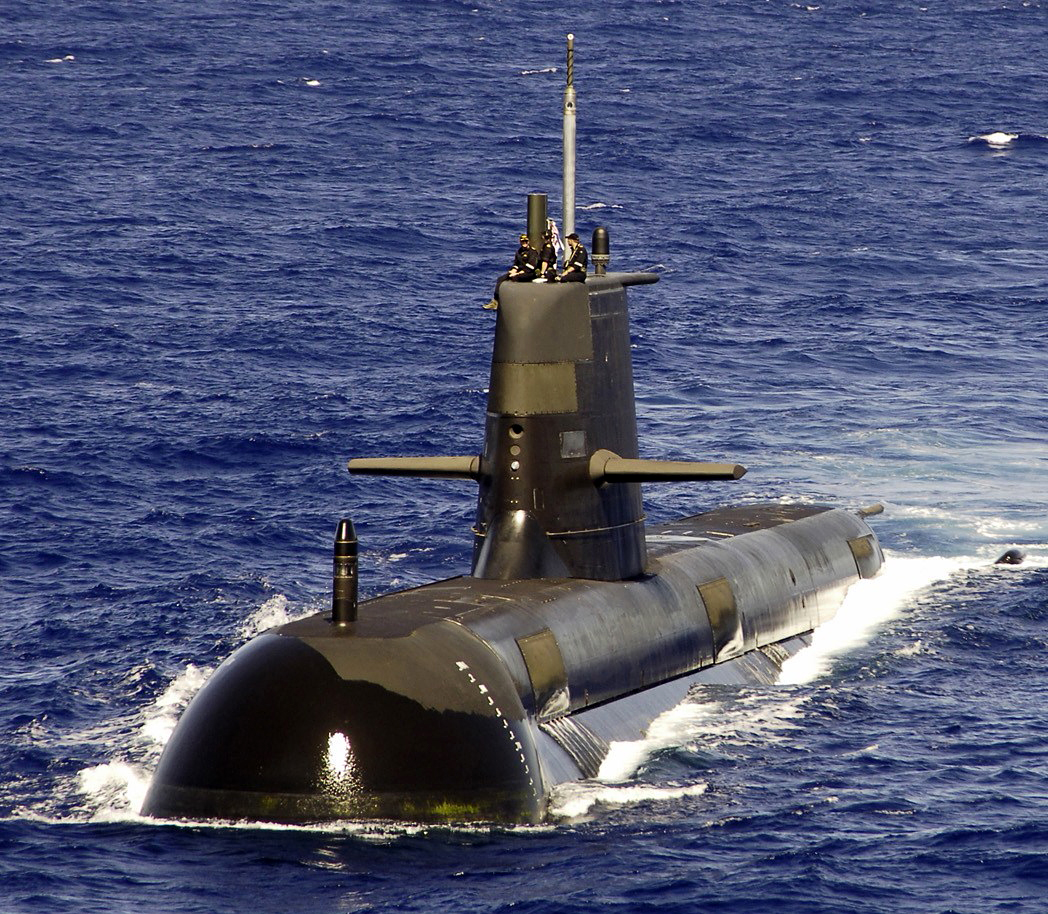
If US allies believe the United States is willing to negotiate its policy towards Taiwan, this will exacerbate the hedging dynamics described above. Moreover, it may put downward pressure on public opinion in countries that have only recently become willing to assume considerable risk and cost in the First Island Chain. For example, the Australian government could find it harder to maintain support for the AUKUS pact, which consumes a significant portion of its defense budget, on the logic that the United States itself no longer seems committed to critical regional contingencies.
Farther afield, the United States has spent years working to attune European and other allies to the risks and costs of a crisis or conflict over Taiwan. If the United States has a clear and predictable posture, it may be able to count on European support for hard-hitting sanctions and other economic measures in the case of a Chinese quarantine blockade. If it demonstrates a willingness to bargain over Taiwan, there is little chance of maintaining such a coalition.
How much defense investment?
How invested will the United States remain in its defense posture in the Indo-Pacific? While past administrations have made some meaningful upgrades to the region, this posture still lags behind what is necessary to support a free and open Indo-Pacific against China’s buildup and pressure (US presence in Southeast Asia is thin, base hardening must be accelerated, prepositioning and munitions stockpiling are inadequate). Chosen conflict in the Middle East and insufficient investment in the defense industrial base has thinned this further.
Will the United States reinvest in the strength of that posture, returning systems and personnel that have been devoted to Iran and recapitalizing its munitions stores, placing priority on defense and deterrence in the region?
Beyond that, how will the United States draw the line on what it seeks to defend? While the First Island Chain (FIC) undeniably remains the nerve center of American power in the region, there is a fundamental question as to whether the FIC should define the United States’ defensive perimeter or be the staging ground for a deeper defensive strategy. It is difficult to defend the Philippines, for example, if the United States does not prevent Chinese dominance of the South China Sea, and unclear that a FIC-alone strategy really achieves the goal of a free and open Indo-Pacific.

What’s more, if the United States changes its approach to Taiwan in ways that make it more vulnerable, raising the risk of crisis or conflict, it risks a rupture in that chain, making other FIC allies harder to defend. The alternative, however, requires the United States to devote more forces to South and Southeast Asia on a sustained and predictable basis.
The United States must also consider what resources to invest in Second Island Chain positions, such as in the Pacific Islands, as well as the role they play in the defensive perimeter.
For their part, Indo-Pacific allies have increased their defense spending between 20 and 40 percent in the 2022–25 time period, and Japan is poised to go further. Will allies accelerate these efforts, as well as defense co-production initiatives with the United States and each other? Will Japan make major domestic investments in its defense industry and become a defense exporter? Will it continue to accelerate its push into the Southwest Islands, even if the US position on Taiwan is less clear?
In some cases, anxiety about US dependability may reduce a given ally’s willingness to spend; in others, it may accelerate it. In either case, however, allies must believe that the United States will remain critical to their defense if they are to spend in ways that supplement American posture, forces, and plans, rather than challenge interoperability.
Networking and bilateral approaches
Allies also face the question of how ambitiously and concertedly they will build upon past US efforts to accelerate their networking with one another, particularly in the defense and security domains. In the face of the threat from China and increased US unpredictability, it is logical for American allies to pull more closely to one another.
Without multilateral structures like NATO and the European Union, Asian allies do not have the collective security or economic integration mechanisms that could compensate for American support. Instead, they are still deeply reliant on a hub-and-spokes system centered on the United States. Furthermore, whereas NATO’s European members have a 9-to-1 combined advantage in gross domestic production over Russia, America’s Asian allies have a 3-to-1 disadvantage in GDP to China (1.5-to-1 if Taiwan and India are included). So, any US pullback would leave Asian allies with deficits, but shortfalls that can be mitigated if they can pull together effectively.
Without the United States leading the charge, say, to merge the best of the Quad, Squad, US-ROK-Japan trilateral, and AUKUS, however, allies and partners lack their own mechanisms to construct such a consortium. Prime Minister Sanae Takaichi’s Japan could lead such an effort given her political popularity and likely tenure, positions on China and defense, and good relationships with the major players.

To meaningfully stent the balance of power, any networked coalition would have to include India. The bilateral downturn in US-India relations has pushed it toward multi-alignment, and while it maintains strong ties with most US allies, it is unlikely to throw its weight into an allied coalition if relations with Washington do not meaningfully improve. To what degree do US policymakers intend to invest energy and resources in rebuilding the relationship with India? Are they willing to do so at the sacrifice of closer ties with Pakistan, even in light of Islamabad’s closer relationship with Saudi Arabia and mediating role in the Middle East?
If the United States wishes allies to be more self-sufficient, Washington should encourage such integration, both behind the scenes and with the investment of senior level efforts, such as minilateral models that convene key players to catalyze their cooperation. There have been no such efforts at this point in the Trump administration, and leader-level attention to minilaterals such as the Quad and US-ROK-Japan trilateral has been scant.
If the United States continues to work through its bilateral alliance network, does not invest in partner networking, and continues to leave doubts in allies’ minds about where it stands on China, it will perpetuate a regional architecture poorly equipped for collective action in the face of quickly growing threats.
Nuclear choices
Questions of American security reliability and approach to China, combined with allied anxiety and latent nuclear capacity, create conditions in which one or more American allies could go nuclear within a decade. At present time, however, the conditions are not ripe for any candidate countries to break out.
With a full reprocessing capability, Japan is the ally with the shortest time to a nuclear breakout. In just a few years, Japanese elites have grown far more comfortable talking about the conditions under which Japan would have to consider acquiring nuclear weapons. Public opinion, however, still reflects a strong nuclear allergy. There are two critical junctures that Japanese elites identify as potentially lifting this constraint:
A Taiwan-related crisis in which the United States does not respond or responds insufficiently, creating the widespread public perception that Japan must fend for itself;
A decision by the South Korean (ROK) government to pursue its own breakout capability.
Prime Minister Takaichi may begin public debate over Japan’s Three Non-Nuclear Principles this year, however, which could lead to a softening of opinion.
In South Korea, nuclear dynamics are inverted. At any given time, at least two-thirds of the public support acquiring an independent deterrent and/or hosting US forward-deployed nuclear weapons (although survey questions do not presuppose any tradeoffs between the two options or between indigenous nuclear development and US alliance commitments/force posture). A 2025 survey found support for nuclear weapons at an all-time high, 76 percent. Elites in the ROK’s conservative party were particularly supportive of such moves under former President Yoon Suk Yeol, but the currently ruling Democratic Party of Korea has never supported an independent deterrent and President Lee Jae Myung has explicitly opposed it.
Without a reprocessing capability, Korea’s timeline to initial nuclear development is cited as three years or more, and during that window Seoul would be at extreme risk of attack by North Korea (DPRK). The current government appears to be pursuing policies that would shorten its time to breakout without beginning the gambit in earnest (it requested a revision of its 123 Agreement as part of a nuclear submarine development proposal). It will probably require a return to conservative government, a major drawdown in US forces, and/or a serious crisis with Pyongyang for this calculus to change.
Taiwan shuttered its last remaining nuclear reactor in 2025, but the Lai government is actively working to reverse this decision given the energy demands of the island’s tech and AI industries. There are no credible sources on Taiwan’s timeline for a nuclear weapons breakout should facilities reopen, but it is reasonable to surmise that it would be lengthy and vulnerable to disruption from PRC attack.
The most likely triggers to allied proliferation in the Indo-Pacific may therefore be:
A significant withdrawal of US troops from the Korean Peninsula triggering an assurance crisis, coupled with a conservative return to power in the ROK, which could also trigger a Japanese breakout (most likely 2030 or later);
A Taiwan crisis to which the United States under-responds, leading Japan to move to break out swiftly after the crisis, which could in turn trigger similar moves in South Korea under the right political circumstances.
In addition to the primary benefits of retaining force posture on the Korean Peninsula and deterring crises over Taiwan, policymakers must therefore consider the secondary proliferation risks of their posture and political moves.
With extreme uncertainty characterizing relations between the two major powers and their approach to other regional players, these nested considerations have the potential to produce vastly different regional and global orders. And with an unprecedented global technology revolution unfolding in the form of the artificial intelligence race alongside these regional dynamics, the challenges ahead are considerable.
Mira Rapp-Hooper is a visiting fellow at the Brookings Institution, senior adviser at The Asia Group, and a former special assistant to the president and senior director for East Asia and Oceania at the White House National Security Council. She is the author of Shields of the Republic: The Triumph and Peril of America’s Alliances (Harvard, 2020) and, with Rebecca Lissner, An Open World: How America Can Win the Contest for the 21st Century (Yale, 2020).