 Powered by


Americans today seem tired of supporting ambitious international agendas.
Three decades ago, after the Cold War ended, American presidents—Republicans and Democrats alike—aspired to promote democracy, markets, and international order worldwide. Explaining his decision to lead an international coalition to liberate Kuwait from Iraq’s invading army in 1991, President George H. W. Bush announced that his aim was more “than [liberating] one small country; it is a big idea: a new world order, where diverse nations are drawn together in common cause to achieve the universal aspirations of mankind—peace and security, freedom, and the rule of law.”
President Bill Clinton envisaged the United States playing a similarly ambitious role, with his Secretary of State Madeleine Albright describing the United States as the “indispensable nation.”
After September 11, 2001, President George W. Bush went further, embracing an even bigger missionary aim for American power. In his second inaugural address in 2005, Bush declared it was “the policy of the United States to seek and support the growth of democratic movements and institutions in every nation and culture, with the ultimate goal of ending tyranny in our world.”
Those times are long gone. Today, American leaders, partially in reaction to the limited achievements of these ambitious agendas, have pivoted towards smaller goals. President Barack Obama did not abandon democracy promotion, but he did not aspire to end tyranny in the world; he sought to end American wars in Iraq and Afghanistan and pledged to support universal values without using military force and in keeping with international rules. The one time Obama authorized the use of force in defense of human rights, in Libya in 2011, he obtained UN Security Council authorization first.
In his first term, President Donald Trump paid little attention to advancing liberty, freedom, or democracy abroad, even as some in his administration tried to maintain the American tradition of supporting democratic values worldwide.
Rhetorically, President Joe Biden reaffirmed an American commitment to defending democracy globally, even convening three democracy summits, and recognized the threat posed by the rise of autocratic powers China and Russia. But his administration launched no initiative to advance freedom abroad comparable in scope to President Kennedy’s US Agency for International Development (USAID) or President Reagan’s National Endowment for Democracy (NED).
In his second term, Trump reversed Biden’s focus on supporting values and pivoted back to his indifference to supporting democratic ideas globally. He matched that rhetorical shift by dismantling USAID, a key organization for funding democracy assistance abroad. Trump also moved to drastically downsize the US Agency for Global Media, whose networks include Voice of America, Radio Free Europe/Radio Liberty, Radio Free Asia, and other US-funded international media. Trump supporters in Congress have repeatedly tried to defund NED.
Trump does not frame international relations as a struggle between autocrats and democrats. Instead, he has nicer things to say about dictators like Vladimir Putin, Kim Jong Un, and Xi Jinping than about leaders of our democratic allies. His disdain for Canadian Prime Minister Mark Carney is particularly striking.
Americans want to defend democracy
American societal preferences today also reflect a shift from ambitious international missions abroad to a more modest agenda. After long wars in Iraq and Afghanistan, Americans are tired of war, which is why Trump’s decision to attack Iran was so unpopular even before this military action failed to produce intended outcomes.
First in the Republican Party but now also in parts of the Democratic Party, isolationist tendencies have grown, buoyed by popular slogans like “America First” and “no more forever wars.” Yet public opinion polls still show solid support for defending democratic values and human rights.
A 2026 Gallup poll found that while most Americans identified “preventing international terrorism” (83 percent) and “preventing nuclear proliferation” (80 percent) as their top foreign-policy priorities, a solid 55 percent of Americans said they considered “promoting and defending human rights in other countries” to be a “very important” foreign policy goal. In a 2025 Ronald Reagan Institute survey, 83 percent of those polled—including 87 percent of Democrats and 81 percent of Republicans—agreed that the United States had a moral obligation to stand up for human rights and democracy around the world whenever possible. This agenda, however, does not seem to be a priority for the current administration right now.
After two decades of global democratic recession, American taxpayers are right to ask hard questions about the effectiveness of democracy-promotion programs. Abandoning democracy promotion completely, however, would be a strategic mistake for anyone who cares about advancing American national interests.
Failures need not be repeated. More modest goals—defense of new democracies or programs to promote global civic education about liberty, freedom, and democracy—might be prudent. But pretending that the United States has not benefited from the advance of democracy in the past is ahistorical. In addition, it is dangerous to assume that the rise of powerful dictatorships will not undermine American security and prosperity in the future. The United States still has a national interest in defending and promoting freedom abroad.
Security benefits from democratic expansion
Throughout American history, all major enemies of the United States have been dictatorships. That does not mean that all autocratic regimes have been foes of the United States. Some have even been important partners, dating back to the French monarchy in the American War of Independence. Other dictatorships have been too weak to threaten American security. However, the deadly cocktail of autocracy and power has consistently threatened American security, including pulling the United States into both world wars and the Cold War.
Over the past century, the United States only went to war or worried about going to war with dictatorships—Germany, Italy, Japan, North Korea, the People’s Republic of China, the Soviet Union and its communist allies during the Cold War; Iraq during the Gulf Wars; Afghanistan starting in 2001; and Iran in 2026. (Whether we should have gone to war with all countries on this list is a different question.) Today, to varying degrees, the list of America’s autocratic adversaries includes Iran, North Korea, Russia, and China.
Autocratic regimes are also more likely to support terrorist organizations hostile to the United States, as the Taliban did for Al-Qaeda before September 11, 2001, and Iran did for terrorist groups that attacked American soldiers in Iraq during the years of war there. Russia and Iran have close ties to the terrorist organizations Hamas and Hezbollah. Democratic countries do not. Terrorist groups supported by autocratic regimes have also attacked American democratic allies and partners, most tragically on October 7, 2023, when Hamas conducted a barbaric terrorist operation against Israel.
Regrettably, during the Cold War, American presidents at times deployed covert power to undermine democratic governments—i.e., the governments of Mohammad Mosaddegh in Iran in 1953 and Salvador Allende in Chile in 1973—out of exaggerated fear of communism. But the United States has never gone to war with a democracy. (Trump’s threat to annex Greenland was the closest we have come.) Having more democratic countries in the world, therefore, makes the United States more secure.
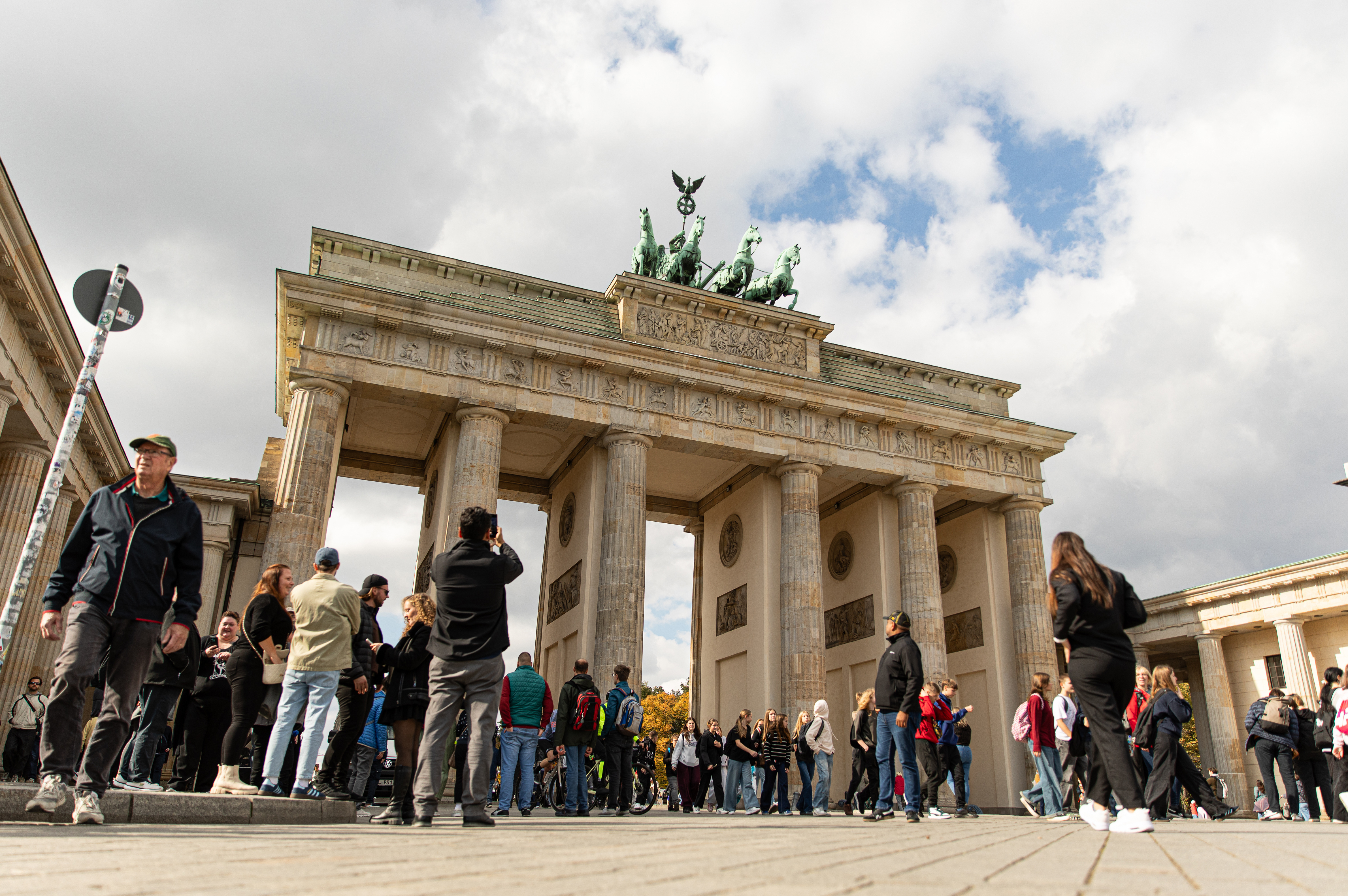
In addition, countries that transitioned from dictatorship to democracy have become less threatening to the United States and have often emerged as loyal allies. This is the case with former autocracies in Germany, Italy, and Japan. A similar pattern unfolded when communist dictatorships in Eastern Europe transitioned to democracy after 1989. Most of these countries eventually joined NATO. Some are now among the most pro-American in the world, and their soldiers fought and died alongside our soldiers in Afghanistan after September 11, 2001.
A closer relationship with formerly communist and now democratic Ukraine will also strengthen the security of democratic Europe, which is a US national interest. Out of tragic necessity, Ukraine has become the best fighting force on the continent, while Ukrainian drone and rocket companies are now building some of the best weapons in the free world.
During the Cold War, some American policymakers feared that transitions to democracy in autocracies closely aligned with the United States would produce antagonistic relations or even bring communists to power. That did not occur. Transitions in Chile, the Philippines, and South Korea in the 1980s temporarily strained but did not break American security relationships with these countries. All of these countries are now US allies or close security partners. Democratization in South Africa in the 1990s did change the nature of bilateral ties, but not in a fundamentally antagonistic way. For a decade, American relations with Russia were cooperative after democratization in the 1990s. Relations became more confrontational only after Putin restored dictatorship in Russia.
Economic benefits from democratic expansion
Beyond greater security, the spread of democratic governments has also enhanced American prosperity because democratic emergence has expanded market institutions, offering greater economic opportunities for American companies.
After World War II, American leaders wisely devoted resources to defending several of our former foes against communist expansion. Helping democracy take root, along with economic assistance through programs like the Marshall Plan in Europe, was part of our containment strategy. It worked. From the rubble of World War II, new democracies with friendly ties to the United States eventually recovered economically, creating major trade and investment opportunities for American consumers and companies.
During the Cold War, democratic Europe emerged as one of America’s most important economic partners, as did Japan and South Korea in Asia, and, closer to home, democratic Canada and later democratic Mexico. Undergirded by institutions such as the IMF, the World Bank, and the General Agreement on Tariffs and Trade (GATT), the free world engaged in economic relations that made all countries better off, especially compared to the communist economic bloc anchored by Moscow.
After communism collapsed in Europe, new democracies adopted market institutions, which in turn created new trade and investment opportunities for Americans there. Today, the transatlantic economic relationship is the largest economic relationship in the world, with approximately $1.6 trillion in goods and services trade between the United States and EU member states in 2025.
The transformation of autocratic adversaries into democracies has also allowed American leaders to spend less on defense, contributing to greater fiscal responsibility and economic growth. The “peace dividends” after World War II and the end of the Cold War were real, although in retrospect, the reductions in defense spending may have gone too far; US leaders in 1945 and 1991 did fail to anticipate the rise of powerful autocracies that would once again threaten American security.
As we enter a new era of great-power competition between autocratic China and Russia and democratic United States and its allies and partners, economic decoupling between autocratic and democratic regimes is accelerating. Trade and investment ties between democratic, market-oriented countries will therefore become more important, particularly regarding strategic technologies like artificial intelligence.
Unlike during the Cold War, the world will not divide completely into two economic blocs. But on critical technologies and critical minerals, the free world will need to deepen its economic interconnectedness while weakening ties with the autocratic world, as the Trump administration’s Pax Silica already aspires to do.
Moral benefits from democratic expansion
Democracy is a superior form of government to autocracy. Dictators claim to speak for their people, but the only way to know what people really want is to let them vote in free and fair elections. Therefore, democracies represent citizens’ preferences more effectively than dictatorships. Democracies are especially effective at avoiding or correcting bad policies pursued by bad leaders, averting famines, and holding leaders accountable for abuses of power
Some autocracies in recent decades have produced economic development, most notably China. Other autocracies today with high economic growth rates include Ethiopia, Rwanda, Uzbekistan, and Vietnam. But dictatorship did not cause this growth; adopting pro-market policies did. After all, the same autocratic regime in China that has guided spectacular economic performance over the past four decades also produced colossal economic disaster during the Mao era.
On average today, democracies tend to outperform autocracies in economic development, health, education, and security. In a 2019 study, Acemoglu, Naidu, Restrepo, and Robinson estimated that democratization increases GDP per capita by about 20 percent in the long run compared to nondemocracies. A study by Thomas Bollyky et al. of 170 countries found that increases in democracy were associated with substantial health gains.
A similar correlation between democratic institutions and economic growth has played out over hundreds of years, especially in Europe, beginning with the Glorious Revolution in England in 1688. As North, Wallis, and Weingast summarized in their account of world history, “Over the long term, open-access politics cannot be sustained without open-access economics, and vice versa. Although evidence from the last few decades is mixed, over the last two centuries, political and economic development appear to have gone hand in hand.”
World Bank data show that eighteen of the top twenty countries by GDP per capita are democracies (Singapore and Qatar are the only non-democracies in this list). Similarly, almost all countries on the World Bank’s Human Capital Index Plus (HCI+), which measures how effectively a country builds human capital through health, education, and employment, are democracies (eighteen out of twenty). Of the world’s twenty largest economies, only three—China, Russia, and Saudi Arabia—are autocracies.
Democratic transitions can also spur economic growth. In the post-communist world, the fastest democratizers also started to grow the earliest. In market economies, democratic breakthroughs tend to stimulate higher growth rates than prior autocracies.
Democracies sometimes break down. Generally, however, democratic governance structures are more stable and provide greater security for citizens. Autocracies at times experience revolutions and civil wars, but consolidated democracies rarely do. As already mentioned, democracies do not go to war with each other. And, as Mayoral and Mueller summarized in their survey of the literature on conflict and regime type, “democracies are more peaceful than non-democracies, and new democracies become more peaceful on average.”
After two decades of democratic recession globally, polls still reveal that most societies would rather be governed by democratic institutions than authoritarian alternatives. It is also telling that most dictators still try to disguise their regimes as democracies—a tacit acknowledgment that democracy remains the more legitimate form of government, even for those who do not practice it.

Vladimir Putin, for example, puts a lot of effort into holding elections, even when genuine opposition parties and candidates are not allowed to participate. Chinese Communist Party leaders call their system of government “whole process people’s democracy,” and have even issued a white paper to explain why this kind of “democracy” is superior to Western systems.
So, normatively, supporting democracy abroad is the right thing for American leaders to do because democracy is what most people want.
Finally, small-d democrats, whether in governments or aspiring to bring democracy to their countries, want to see the United States more engaged in supporting ideas of freedom, liberty, and the rule of law. So, shouldn’t we want to be on their side? Supporting small-d democrats in autocracies is the right thing to do (and we can do this without using military force). Propping up dictators in these countries or signaling indifference to the plight of citizens living under these dictatorships is not. Supporting new or threatened democracies such as in Ukraine is also the right thing to do.
The rewards of doing right
Polls cited above show that many Americans want our foreign policy leaders to care about democratic values in addition to security and prosperity. Of course, makers of US foreign policy must focus first on enhancing the security and prosperity of American citizens. But American leaders can pursue security and economic goals without abandoning our values. And sometimes, doing the right thing should be an end in itself.
But there’s a bonus. Acting morally can also advance more instrumental goals. Defending democratic values—universal values—can renew America’s reputation as a good and just country, a correction desperately needed today. As polling by Pew Research Center shows, positive views of the United States, even among democracies, are declining as China’s reputation rises. American leaders can partially reverse these percentages by demonstrating a stronger commitment to democratic values, which, again, remain popular worldwide. A better reputation can, in turn, help American leaders achieve other security and economic goals. As former secretary of state Madeleine Albright once said, “Promoting democracy and human rights is not just the right thing to do; for America it is the smart thing to do.”
Relatedly, siding with small-d democrats and democratic ideas can also help the United States compete effectively with autocratic great powers like China and Russia. In fact, the popularity of democracy makes American solidarity with democratic ideas, leaders, movements, and government one of our most powerful competitive advantages in the twenty-first century.
Even during this era of global democratic recessions, tens of thousands still mobilize for democratic values. Brave democratic activists and human rights defenders are routinely jailed—some are even murdered—in autocratic regimes. The same does not happen in democratic societies to promoters of dictatorship.
US efforts to advance democracy have achieved limited results in the past two decades. We need creative thinking about how to support freedom, human rights, and democracy more effectively. But the benefits to Americans of more democracy in the world should not be questioned. The goal remains clear—it’s the means that need improvement.
Michael McFaul is the Peter and Helen Bing Senior Fellow (joint) at the Hoover Institution as well as a professor of political science and a senior fellow at the Freeman Spogli Institute for International Studies at Stanford University. From January 2012 to February 2014, he served as US ambassador to the Russian Federation. He is the author of Autocrats vs. Democrats: China, Russia, America, and the New Global Disorder (Mariner Books, 2025) and writes at McFaul’s World (Substack).