 Powered by
This article is part of Liberty Amplified, a series produced in partnership with the Hoover Institution’s Human Security Project and the Hoover Institution Library & Archives, featuring voices that challenge authoritarianism in pursuit of freedom.
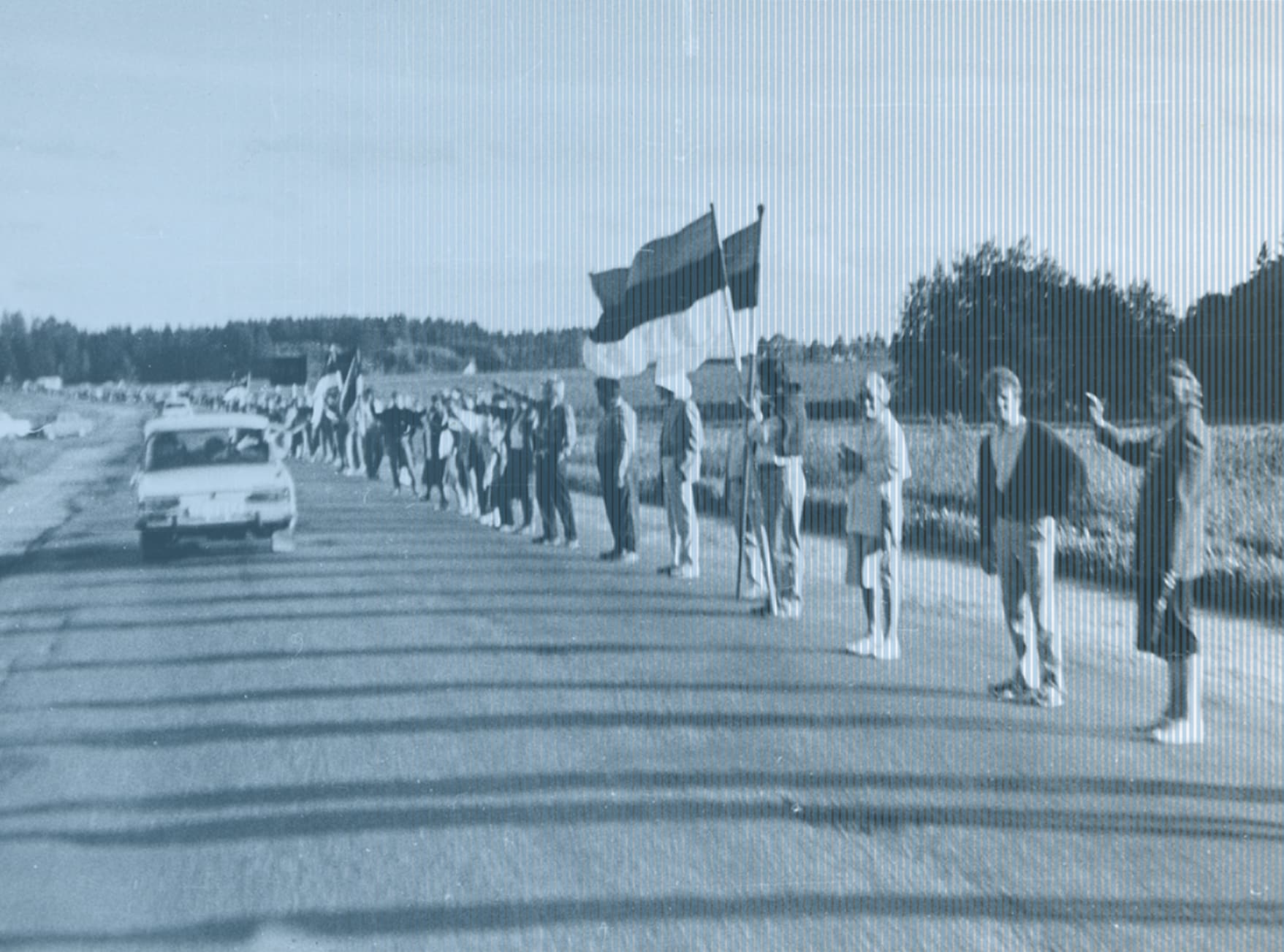
On the morning of August 23, 1989, thousands of Estonians set out for roadsides, town squares, and village crossroads across the country. Some traveled with friends and neighbors. Others climbed into crowded buses or accepted rides from complete strangers. Many carried something in their hands: a homemade banner, a freshly printed poster, or a blue-black-and-white Estonian flag that, only a few years earlier, could not have been taken out so openly.
For one day, these objects became part of one of the largest peaceful demonstrations in modern history.
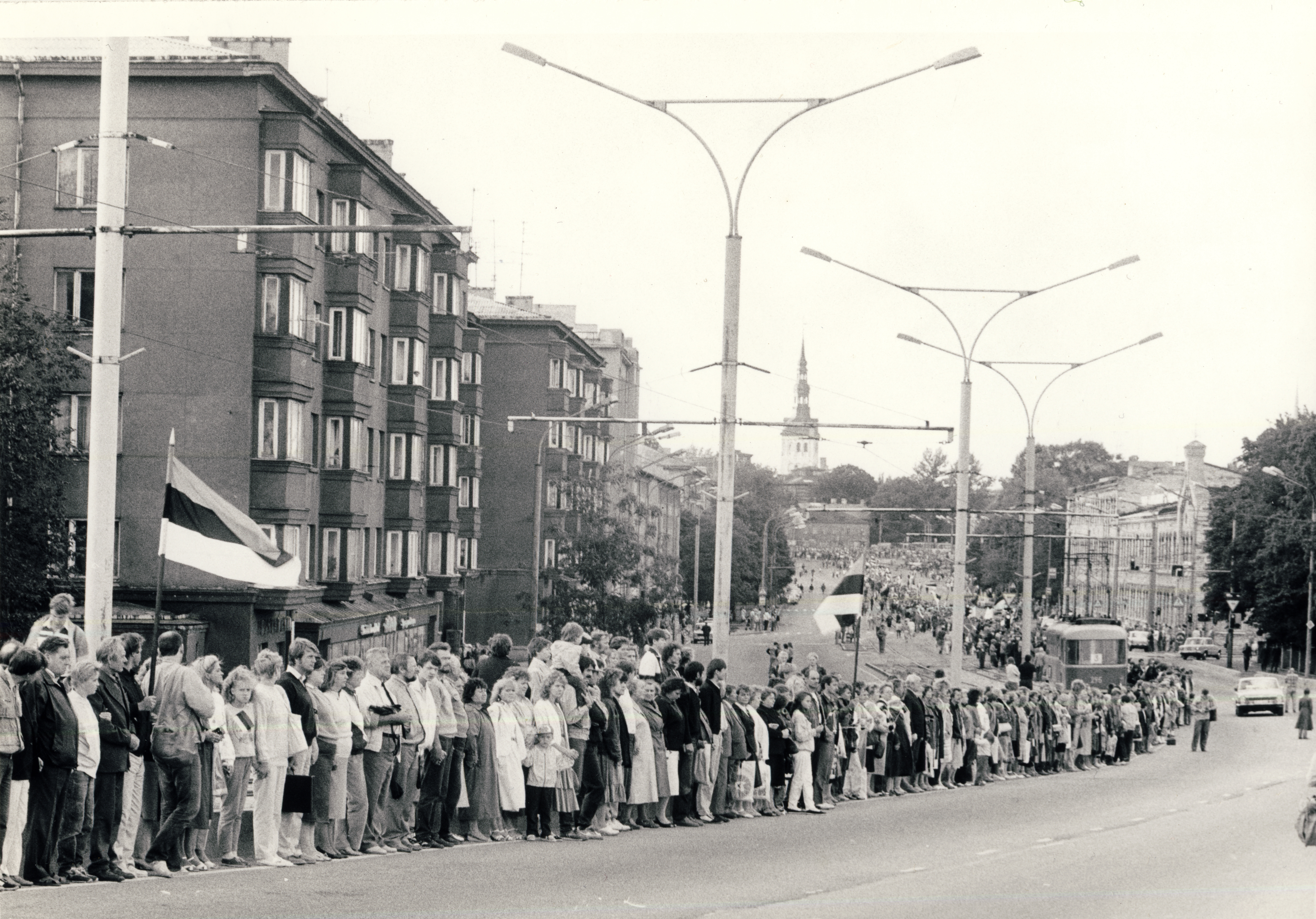
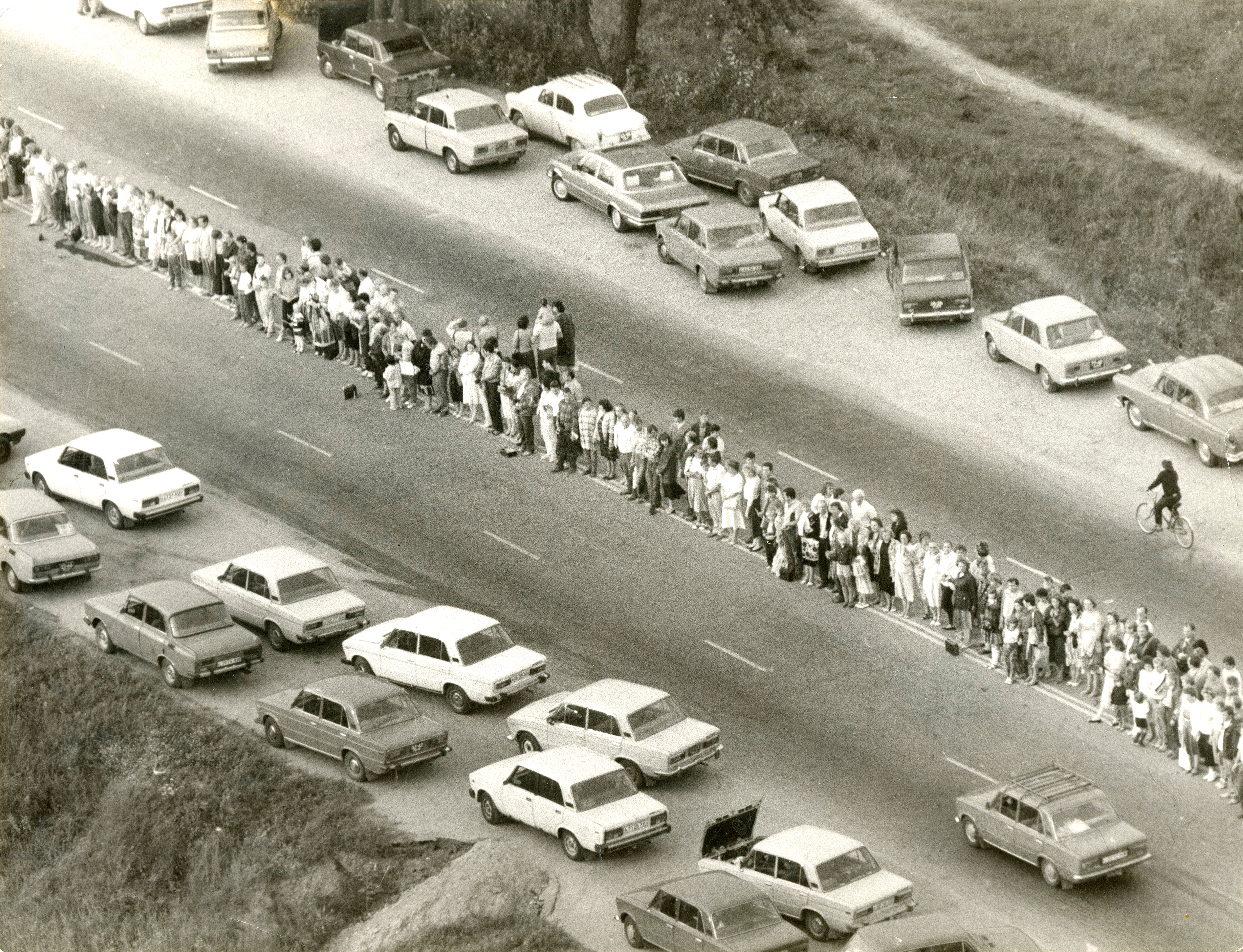
The Baltic Way is often remembered for its extraordinary scale. Nearly two million people joined hands across Estonia, Latvia, and Lithuania, forming a human chain stretching some 600 kilometers and connecting three Baltic capitals: Tallinn, Riga, and Vilnius. Broadcast around the world, it became one of the defining images of the Singing Revolution and the Baltic struggle to restore independence.
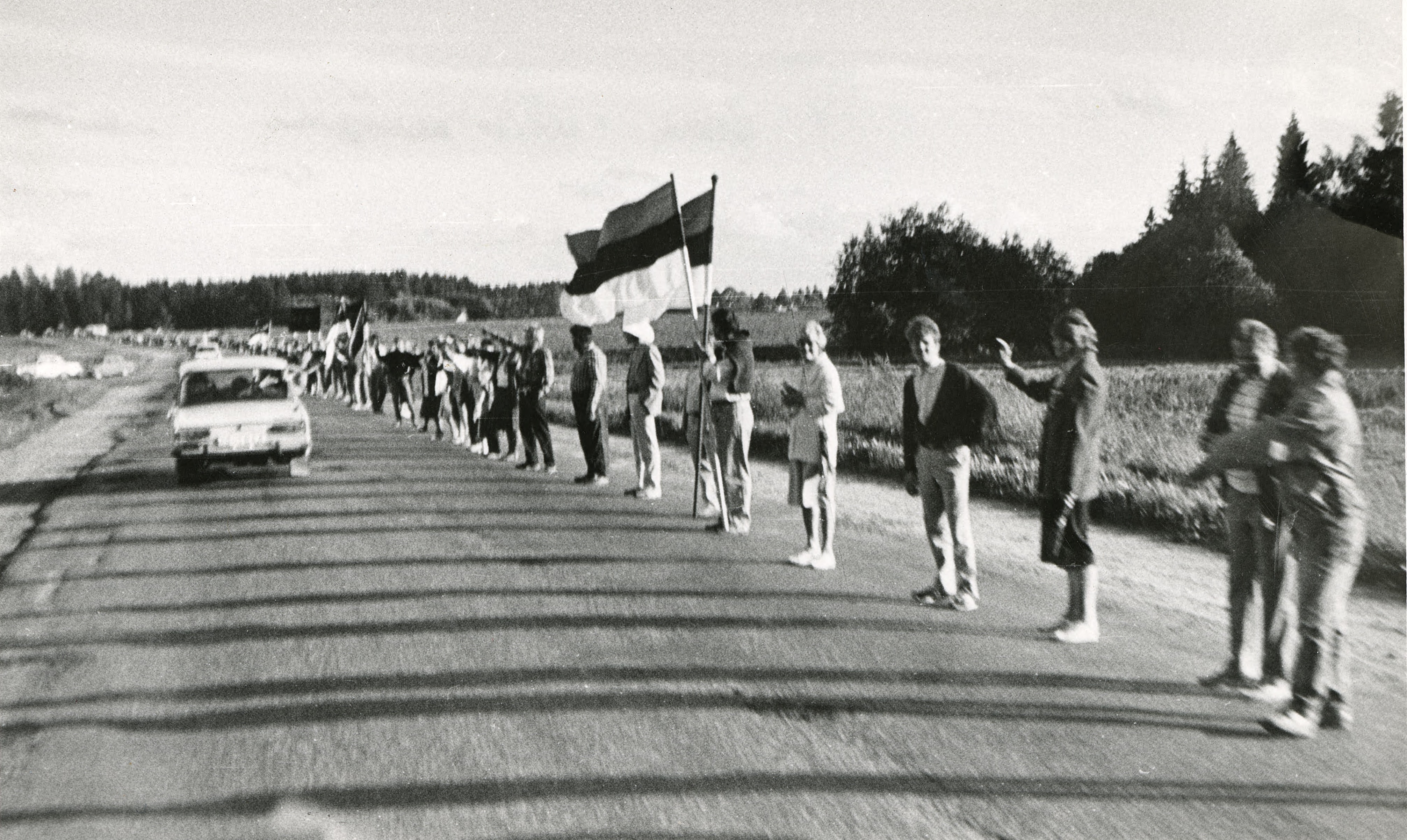
But the Baltic Way did not begin when people took each other’s hands. It began much earlier—in homes, workplaces, conversations, and ideas shared between ordinary people who decided that fifty years after the Molotov-Ribbentrop Pact, silence could no longer stay the same way.
The Molotov-Ribbentrop Pact, signed August 23, 1939, by Nazi Germany and the Soviet Union, contained secret protocols that divided Eastern Europe into spheres of influence. Estonia, Latvia, and Lithuania were assigned to the Soviet sphere, a decision that paved the way for occupation, mass deportations, political and cultural repression, and the loss of independence for half a century.
For decades, Soviet authorities sought to suppress public discussion of the pact and deny the existence of secret protocols. Remembering became political. Speaking openly about the origins of Soviet occupation challenged the official narrative promoted by the regime.
By 1989, remembering had become an act of civic courage.
That courage survives today not only in photographs of the Baltic Way, but also in the objects people chose to preserve.
In Vabamu Museum of Occupations and Freedom, two seemingly modest objects tell this story particularly well.
The first is a hand-painted white textile banner carrying a quotation from Estonian poet Marie Under. She was one of Estonia’s most prominent poets of the twentieth century. In September 1944, as the Soviet Union reoccupied Estonia, she fled the country with her family and eventually settled in Sweden. For Estonians gathering for the Baltic Way in 1989, her words carried the memory of a country and a cultural world from which many had been forcibly separated:
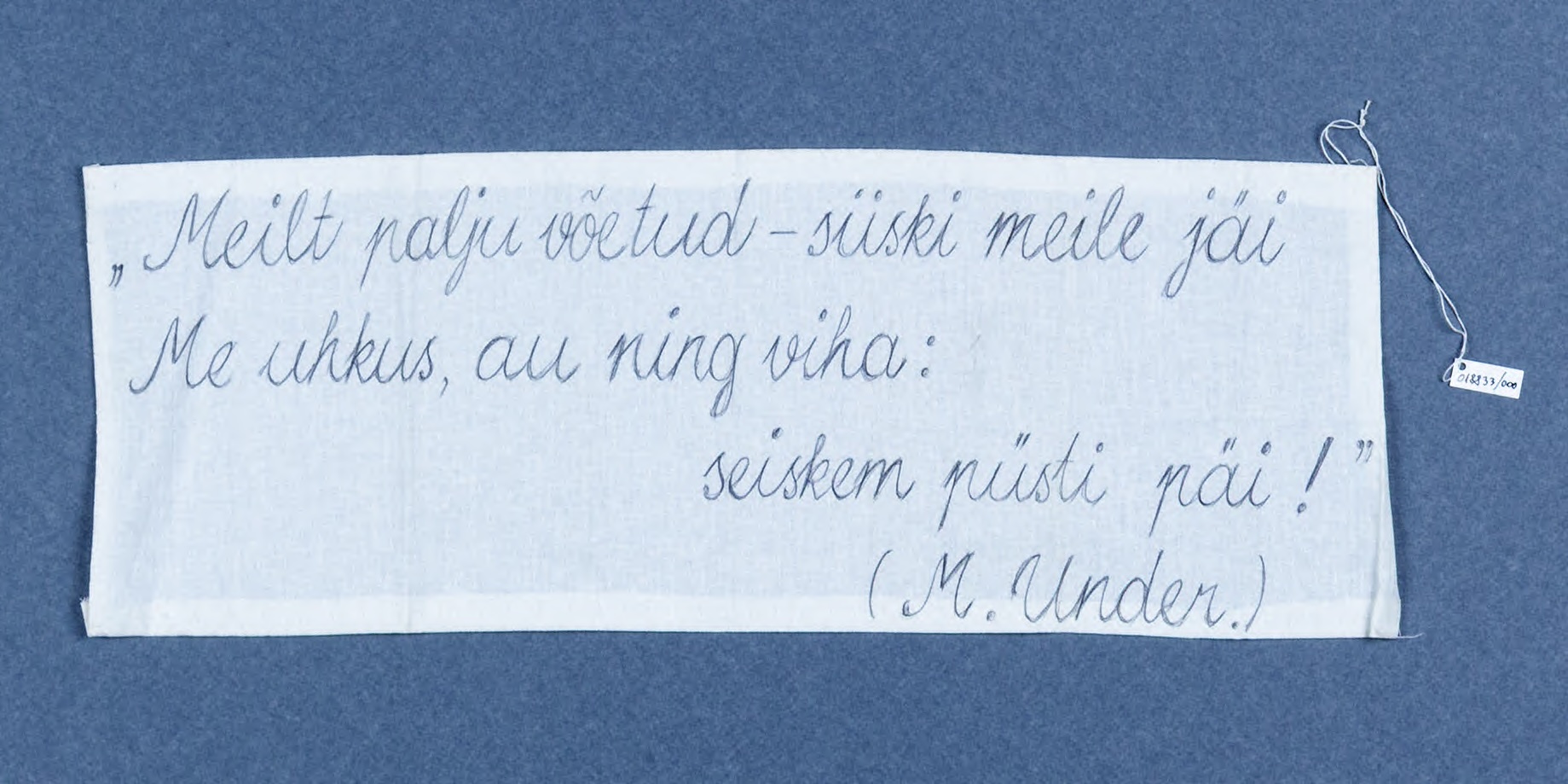
Much has been taken from us, yet still remains our pride, our honor and our anger: let us stand with heads held high.
The banner was never intended to become a museum object.
According to the donor, the small banner was created simply to be carried during the Baltic Way. The original plan of the donor had been to join the human chain on Toompea in Tallinn. But when the crowds became so large that it was impossible to form a continuous line, an unexpected solution appeared: someone found a truck heading out of the city. Climbing aboard with strangers, the donor eventually reached another section of the route, carrying the banner all the way.
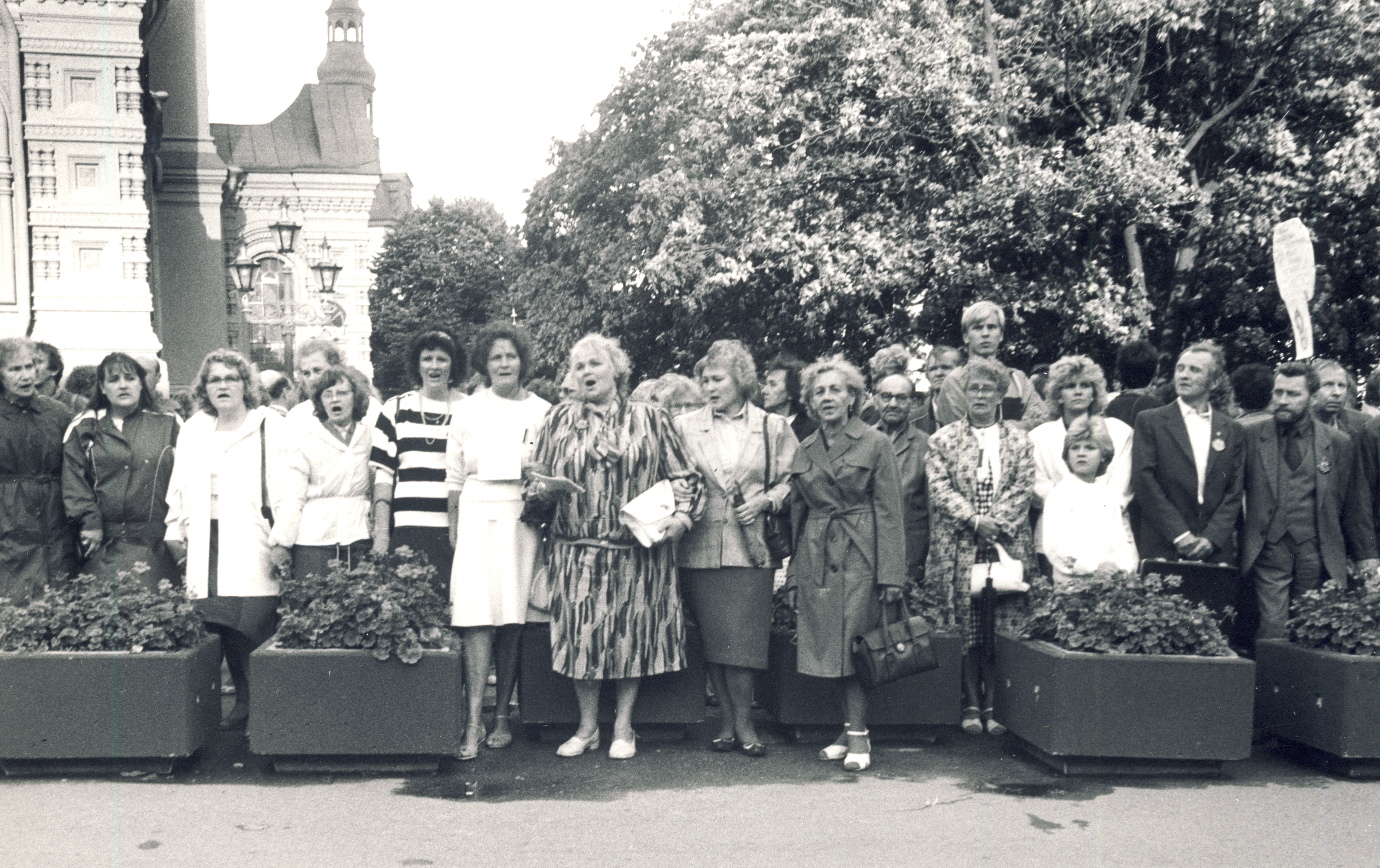
A small story, yet it captures something essential about the Baltic Way. People adapted and helped one another. They refused to give up when plans changed. The strength of the demonstration lay not only in careful organization but also in thousands of individual decisions to participate, whatever obstacles arose.
A second object in Vabamu’s collection tells the story from another perspective.
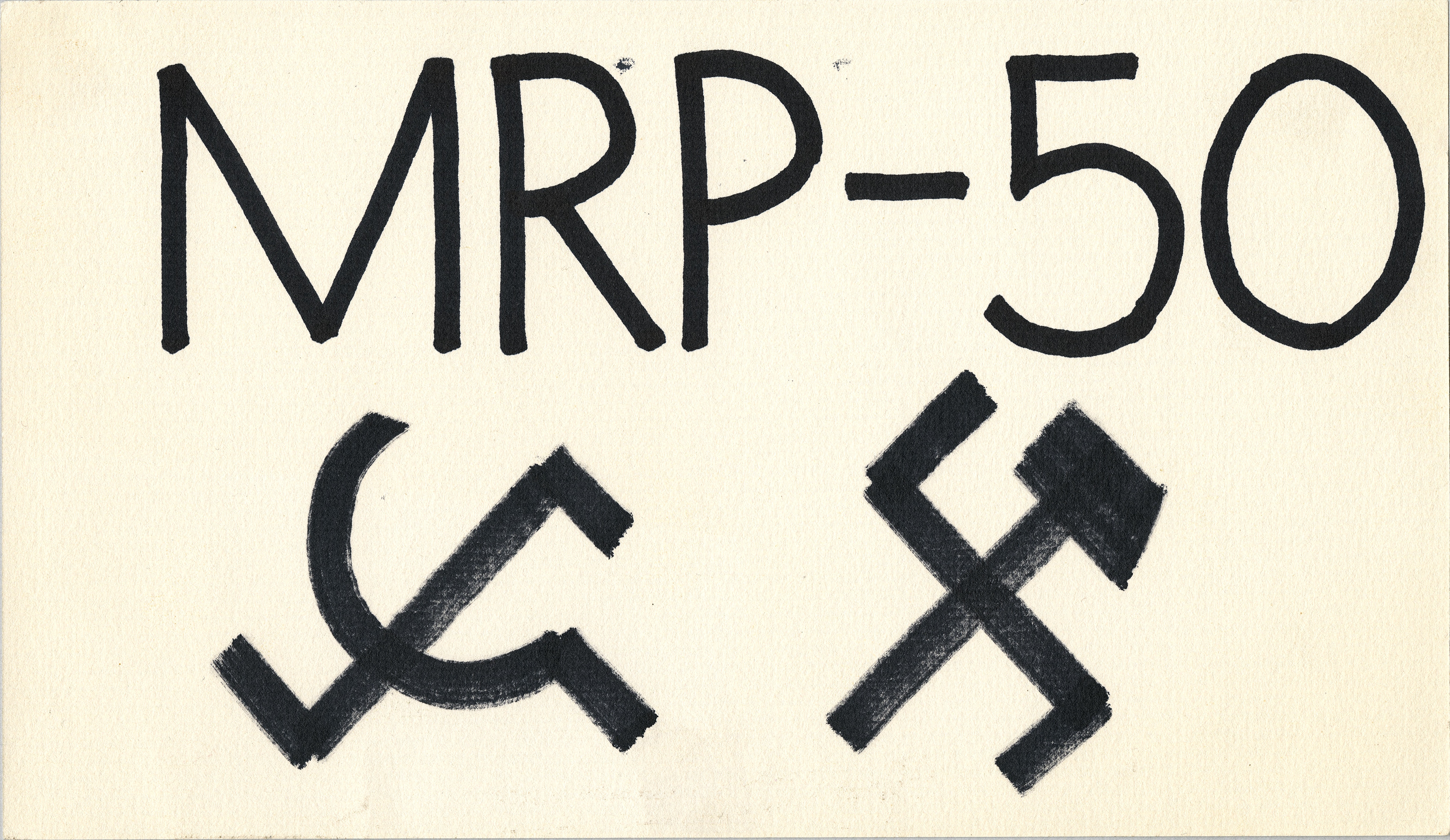
This poster referring to the fiftieth anniversary of the Molotov-Ribbentrop Pact entered the museum together with a detailed account of how it had been produced.
According to the donor, employees at the BIT enterprise (a Soviet-era experimental publishing and printing enterprise based in Tallinn) designed and printed the posters shortly before August 23. The design combined the Nazi swastika with the Soviet hammer and sickle. Working after hours, the workers prepared copies of the poster. The following day, colleagues and family members traveled by car along the Baltic Way route, handing the posters through windows to participants assembling across Estonia.
Their contribution was not dramatic; they did not give speeches; they did not lead political organizations. Instead, they used the tools they knew best: a printing press, paper, ink, and trusted personal networks. With that, they helped transform historical memory into public action.
Photographs preserved in Vabamu’s collections show participants throughout the Baltic Way carrying banners and posters with similar visual language. References to the Molotov-Ribbentrop Pact, the year 1939, and symbols condemning both Nazi and Soviet totalitarianism appeared repeatedly across the human chain.
Museums often preserve remarkable objects and stories behind them, but sometimes the most powerful objects are remarkable precisely because they are ordinary.
A piece of painted cloth or a printed poster—a paper or a fragment of cloth that was never meant to survive beyond a single afternoon.
What gives these objects their significance is not their material value but the stories that stand with them.
When these items entered Vabamu’s collections in 2014 and 2015, they arrived together with memories. Donors explained where the objects had been made, how they had been used, and why they had decided to preserve them for more than two decades before finally entrusting them to the museum.
Without those personal accounts, the objects would tell only half of the story. History is experienced not only through political leaders or landmark events but through countless individual choices that rarely appear in textbooks.
The Baltic Way lasted only a few hours; the banners and posters were created for a single day, yet someone decided to fold a banner instead of throwing it away.
Someone kept a poster in a drawer for twenty-five years and eventually carried these fragile reminders into a museum, believing that future generations should know not only what happened on August 23, 1989, but how it felt to be there.
Authoritarian regimes often attempt to control memory because memory shapes identity.
The Baltic Way demonstrated the opposite: when ordinary people reclaim their own history, remembrance itself becomes a form of peaceful resistance.
Today, visitors could encounter different pieces of memories behind museum glass. They no longer call people to gather along a highway.
Instead, they ask a quieter question, one that remains relevant far beyond Estonia:
What happens when ordinary people decide that remembering is itself an act of freedom?
Liisi Ploom is a historian and head of collections at Vabamu Museum of Occupations and Freedom in Tallinn, Estonia. Her work focuses on the preservation, documentation, digitization, and accessibility of museum collections, as well as on how museums can preserve and share the personal stories connected to historical objects. She is a board member of the Estonian Museums Association and an active member of Estonia’s wider museum community, with a particular focus on collections and collection care.
Liberty Amplified features the voices of those who defy autocracy in pursuit of freedom. It is produced in partnership with the Hoover Institution’s Human Security Project and the Hoover Institution Library & Archives.