 Powered by
This article is part of Liberty Amplified, a series produced in partnership with the Hoover Institution’s Human Security Project and the Hoover Institution Library & Archives, featuring voices that challenge authoritarianism in pursuit of freedom. Today marks four years since Jina Mahsa Amini died in Iranian custody after she was arrested for allegedly wearing her hijab improperly. The “Women, Life, Freedom” movement, which followed Amini’s death, speaks to the Iranian desire for freedom from a terrorist regime.—General H. R. McMaster
On February 11, 1979, the Islamic Republic seized power in Iran. Within days, it turned first on women, abolishing the Family Protection Law, legislation the Pahlavi government had passed in 1967 and strengthened in 1975. That law had curbed polygamy, raised the minimum marriage age, and given women real standing in divorce and child custody cases. Ayatollah Khomeini suspended it almost at once, dismantling protections that had taken generations to build.[1]
During his interviews with Western media in Paris, Khomeini practiced taqiyya—an expedient lie intended to foster the faith or protect the faithful—by denying he intended to make the hijab mandatory. Once in power, he did exactly that.
Women did not accept it quietly. While most political factions fell in line with the new order, women were among the first to resist. On March 8, 1979—International Women’s Day—thousands marched through Tehran against sharia law and forced veiling, confronting the new government before almost any other group dared to.[2]
The regime crushed them systematically. It flooded the streets with morality police. It forced the hijab into workplaces and universities, then all public spaces by the early 1980s, branding resisters “Westernized,” “anti-Islamic,” and “agents of foreign colonizers” to justify the crackdown. Women were free only in their homes, and even there, feared a watching neighbor, relative, or informant. That fear forced Iranian women into a double life: one face for the street and another for home.
“Death to oppression!”
Resistance never stopped, as three well-regarded Tehran University professors, Azar Nafisi, Hayedeh Daragahi, and Fereshteh Shahpar, who taught English literature and psychology, were expelled for refusing mandatory hijab. In 1994, Dr. Homa Darabi, a pioneering child psychiatrist who had lost her university post over the same refusal, set herself on fire in Tehran’s Tajrish Square, tearing off her headscarf and shouting “Death to oppression! Long live liberty!” before she died from her burns.[3] Her death became an early, searing symbol of the veiling mandate’s cost to Iranian women and of a relentless resilience that would echo decades later in Mahsa Amini’s name.
The regime’s misogynistic codes and behavior kept producing casualties: the marriage law set girls’ minimum age at nine, later raised to thirteen under pressure, though a judge and father can still authorize marriage below that. Human rights groups report over 40,000 girls under fifteen married in Iran in 2014 alone, while courts still hand down light sentences for so-called honor killings.[4]
In September 2019, Sahar Khodayari poured gasoline over herself outside a Tehran courthouse. She had just learned she faced six months in prison for entering Azadi Stadium dressed as a man to watch a soccer match. Fans called her the “Blue Girl” because of her love for Esteghlal FC, which used that color. She died days later.[5] Since shortly after the 1979 revolution, Iran’s Islamic regime had barred women from men’s sporting events, and FIFA did nothing about it for years. Only after Sahar Khodayari’s death did FIFA finally pressure the government to allow women into stadiums. Even then, facing the threat of losing its World Cup qualifier hosting rights, the regime resorted to token gestures, admitting only a limited number of handpicked women to select international matches, while the ban on women attending domestic league games stayed largely intact.
The regime built a comprehensive gender apartheid under sharia law that it still runs today: separate access to sports, blocked entry to entire fields of study and work, unequal inheritance and courtroom testimony, a legal system valuing a woman’s life and word as less than a man’s. For decades, governments claiming to defend democracy did business with the regime anyway. They negotiated and traded with it. Meanwhile, women in those governments’ own delegations dutifully donned the hijab the moment they landed.
By contrast, the late bestselling artist, author, and director Marjane Satrapi (writer of Persepolis), who was born in Iran and eventually settled in France, refused the Légion d’Honneur in January 2025. She did this to protest the French government’s hypocrisy in its dealings with the Islamic regime.
Submit or resist
Some in Western media and regime apologists framed the hijab as cultural respect or personal choice; in reality, it was submission to a legal mandate. That mandate was backed by surveillance, fines, and arrest. Despite this framing, Iranian women risked arrest daily just by showing their hair. The morality police had killed before, including Jina Mahsa Amini, a twenty-two-year-old Kurdish-Iranian woman. Arrested in Tehran on September 13, 2022, for allegedly wearing her hijab improperly, she died in custody three days later, on September 16.[6]
Millions of Iranians, led by women, took to the streets after she died, protesting four decades of despotism and sharia rule and chanting “Woman, Life, Freedom.” They burned headscarves, danced around fires, and revived ancient Iranian mourning traditions, like cutting their hair in grief. The fire-dancing and mourning rituals had survived for centuries at Iran’s cultural periphery, kept alive precisely because they sat outside enforced Islamic law after the Islamic conquest of Iran in the seventh century. Their return to Iranian public life in 2022 highlighted the fact that Iranian identity and Islamic Republic laws aren’t one and the same. Four decades of enforced hypocrisy had hit its limit.
Mandatory hijab has worked as a gatekeeper: comply, or lose your job, your school or university seat, your passport, your national ID, your driver’s license, or even your automobile. Women continued to resist at great peril; some were beaten in the streets, far too many had their faces deformed by an attacker pouring acid, and some were killed. But more oppression begat only more defiance: women began living as themselves in public, not merely in private.
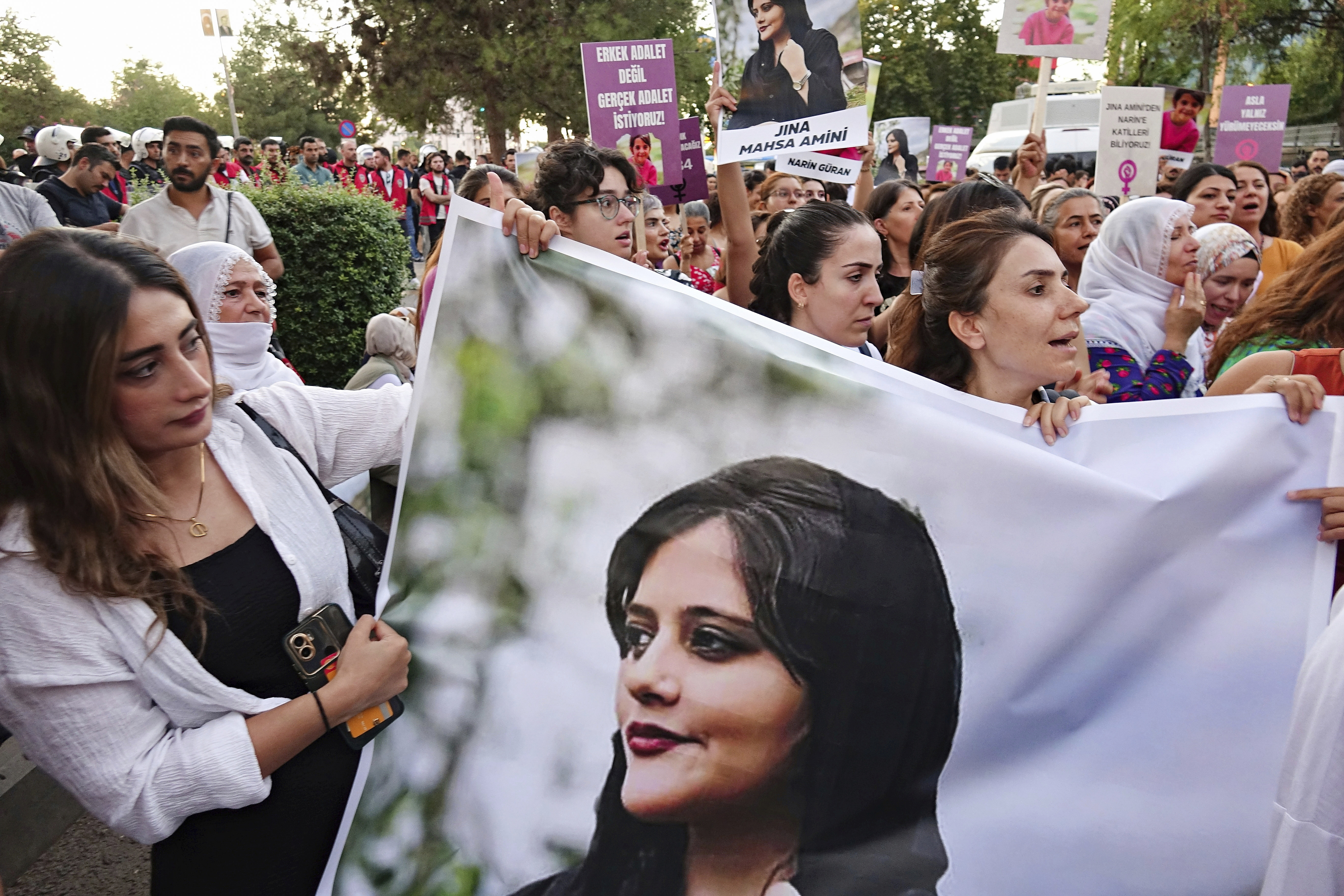
Now it’s common, even in Iran’s smallest cities, to see women without hijab in the street.
There are now more women entrepreneurs, heads of households, poets and writers, scientists and scholars than ever before. The regime still coerces compliance through denying access to government buildings, and continued threats. Despite misogynistic laws, women now fight for their rights in divorce and custody. They have realized that their resistance is the only source of their liberty. As Forugh Farrokhzad, an iconic woman poet of mid-1960s Iran, wrote: “Ask the mirror for the name of your savior.” Iranian women know: they are their own saviors.
[1] Haleh Afshar, Islam and Feminisms: An Iranian Case Study (Women’s Studies at York Series), Palgrave Macmillan, January 1, 1999
[2] https://www.mystealthyfreedom.org/women-protesting-forced-hijab-1979/
[3] https://iranwire.com/en/women/136242-influential-iranian-women-homa-darabi-1940-1994/
[4] https://iranhumanrights.org/2015/09/child-marriage/
[5]https://www.amnesty.org/en/latest/press-release/2019/09/iran-shocking-death-of-football-fan-who-set-herself-on-fire-exposes-impact-of-contempt-for-womens-rights/
[6]https://www.amnesty.org/en/latest/news/2024/09/iran-two-years-after-woman-life-freedom-uprising-impunity-for-crimes-reigns-supreme/
Mohadeseh Salari Sardari is a PhD candidate in the Department of History of Art and Architecture at Brown University. Building on her architectural training in Iran, her doctoral research, “Literary Selves and Architectural Spaces: Women and the Making of Modern Iran, 1900–1941,” explores gendered spatial dynamics through the lens of early twentieth-century Iranian women’s literature.
Liberty Amplified features the voices of those who defy autocracy in pursuit of freedom. It is produced in partnership with the Hoover Institution’s Human Security Project and the Hoover Institution Library & Archives.