 Powered by

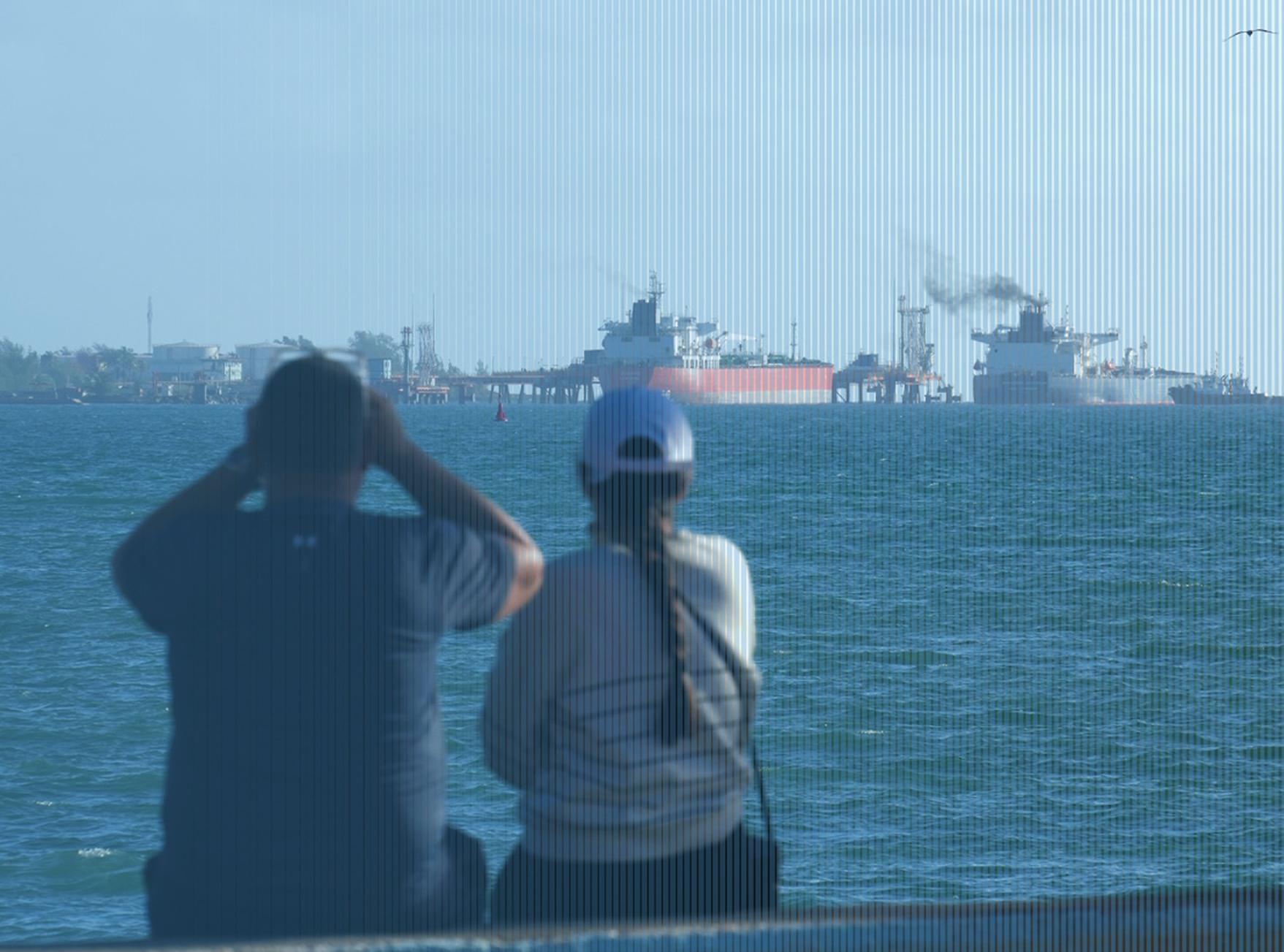
The scene is frightfully familiar.[1] Country A, known for its obdurate behavior, has crossed yet another red line by swiftly occupying a small island that international law recognizes as Country B’s sovereign territory. Western leaders, meeting a week later in a quaint European town, release a strongly worded statement announcing the harshest sanctions against Country A, from freezing its international assets to sharply limiting its oil exports. Voters, reassured by the indomitable resolve of their leaders, sleep the sleep of the just.
Ought we to expect Country A to mend its ways? No.
This blunt answer is one of the few lessons economic history offers with any clarity. Economic sanctions date back at least to c. 432 BC, when, as Thucydides tells us, Athens barred Megarian traders from the ports of its empire and from the market in Athens. The goal was to force the reluctant polis of Megara to show greater deference to Athenian wishes and, more pointedly, to stop sheltering slaves who had run away from Athens. But only in 1919, with Article 16 of the League of Nations Covenant, did economic sanctions become a central instrument of international law for coercing states collectively into following the league’s rules.
We can then turn to the past one hundred and seven years and consult the record of economic sanctions’ triumphs. First, we need to define “success.” This apparently simple task is much harder than it seems. Did the sanctioned state change its behavior as the sanctioning states requested? If it did, how can we tell whether it was because of the sanctions or for some other reason, such as the threat of violence or internal pressures?
Researchers have debated these questions for decades and, as always happens in academia, are divided into two feuding camps. One side, led by Gary Hufbauer and his coauthors at the Peterson Institute, argues that sanctions rarely work: about one in three times. The other side, led by political scientist Robert Pape, opposes this finding with some vehemence: sanctions, it argues, almost never work, only about one in twenty times. And when they do work, it is against states that were not all that callous to begin with, rather than against the worst actors on the international stage.
Why should an instrument so beloved by politicians, the media, and voters alike fail so reliably? Economic theory offers four reasons.
The first reason is what economists call incidence, a grand way of asking “who pays the cost of the sanctions?” Rulers, especially those in autocracies, rarely pay much of it. Their foreign travel may be curtailed, their sons and daughters expelled from Oxford and Cambridge, and their seaside villas on the French Riviera confiscated, but home offers plenty of other amusements. The same holds for the small ruling coalitions on which autocracies rest. Even the poorest government can find the resources to lavish on its inner circle and keep everyone in line. Ordinary citizens, by contrast, bear the full cost. Autocracies also have a disturbing tendency to endure their subjects’ suffering with remarkable fortitude. Not caring about them has its advantages.
The second reason, not unrelated, is that economic sanctions hand the sanctioned government an extraordinary new power: deciding who gets the few goods that slip past the barriers. If only a few tens of thousands of barrels of oil can be smuggled into the country, a few gallons of gasoline become a price at which many a conscience is happily sold. There was an old joke in Mussolini’s Italy that the initials PNF, for Partito Nazionale Fascista (National Fascist Party), really stood for Per Necessità Familiare (“out of family need”). When the League of Nations sanctioned Italy after its invasion of Abyssinia, family needs became more pressing than ever.
Third, modern economies are complex networks with many alternative ways to produce goods and services. Electricity can be generated from fuel oil, natural gas, coal, nuclear power, or renewables. These technologies are not perfect substitutes, but they are substitutes nonetheless. This is why the Allies, to their surprise, found it so difficult to shut down the economies of Germany and Japan during World War II, despite the extraordinary effort behind strategic bombing. Both countries found plenty of ways to reroute production around the damage, and for far longer than political leaders and generals in Washington and London had anticipated.
Fourth, the modern globalized economy offers many workarounds to any sanction: new suppliers, new routes, new materials, new goods, and new specifications. Over the past three years, I have spent much of my research time on this last mechanism, specifically analyzing oil sanctions.
The art of evasion
Since 1995, the United States and its allies have imposed oil sanctions on Iran, Russia, Syria (until 2025), and Venezuela (partially lifted in 2026). The goal was simple: these economies were heavily dependent on oil (for Iran and Venezuela, it was pretty much the only export they had of any value), so by limiting their oil exports, the United States could compel these countries to change their ways without the use of force, considered either too costly or, in the case of Russia, close to impossible given its nuclear arsenal.
If one looks at measured oil exports, it is easy to see a causal effect of sanctions on quantities: official statistics tell us that these countries ended up exporting less oil than we would have expected before the sanctions (this qualification is important: one must measure oil exports against a meaningful counterfactual, not just the level before the sanctions were imposed). But reality soon proved more complex. Before long, a dark fleet of oil tankers began busting sanctions (there is also land-based oil smuggling, but let me ignore it here).
This dark fleet is composed of vessels that evade sanctions through a variety of deceptive practices. The most common practice (though not the only one) is to switch off the ship’s automatic identification system, or AIS.
An AIS transponder is a small device that announces by VHF radio, every few seconds, who the ship is, where it is, where it is heading, and how fast. Other ships, coastal stations, and satellites receive the signal. Every vessel of 300 gross tons or more on international voyages must carry a transponder, including every oceangoing oil tanker.
The obligation is more than twenty years old, but an honest captain would carry a transponder without being told: AIS makes a collision on the high seas much less likely, and only those vessels with something to hide object to being seen by third parties. The rules allow the captain to switch the transponder off only when broadcasting would endanger the ship, as it might in waters where pirates operate. Nor is the expense any excuse. A new Class A, SOLAS-approved transponder for an oil tanker costs a few thousand dollars, and the tanker that carries it is worth tens of millions.
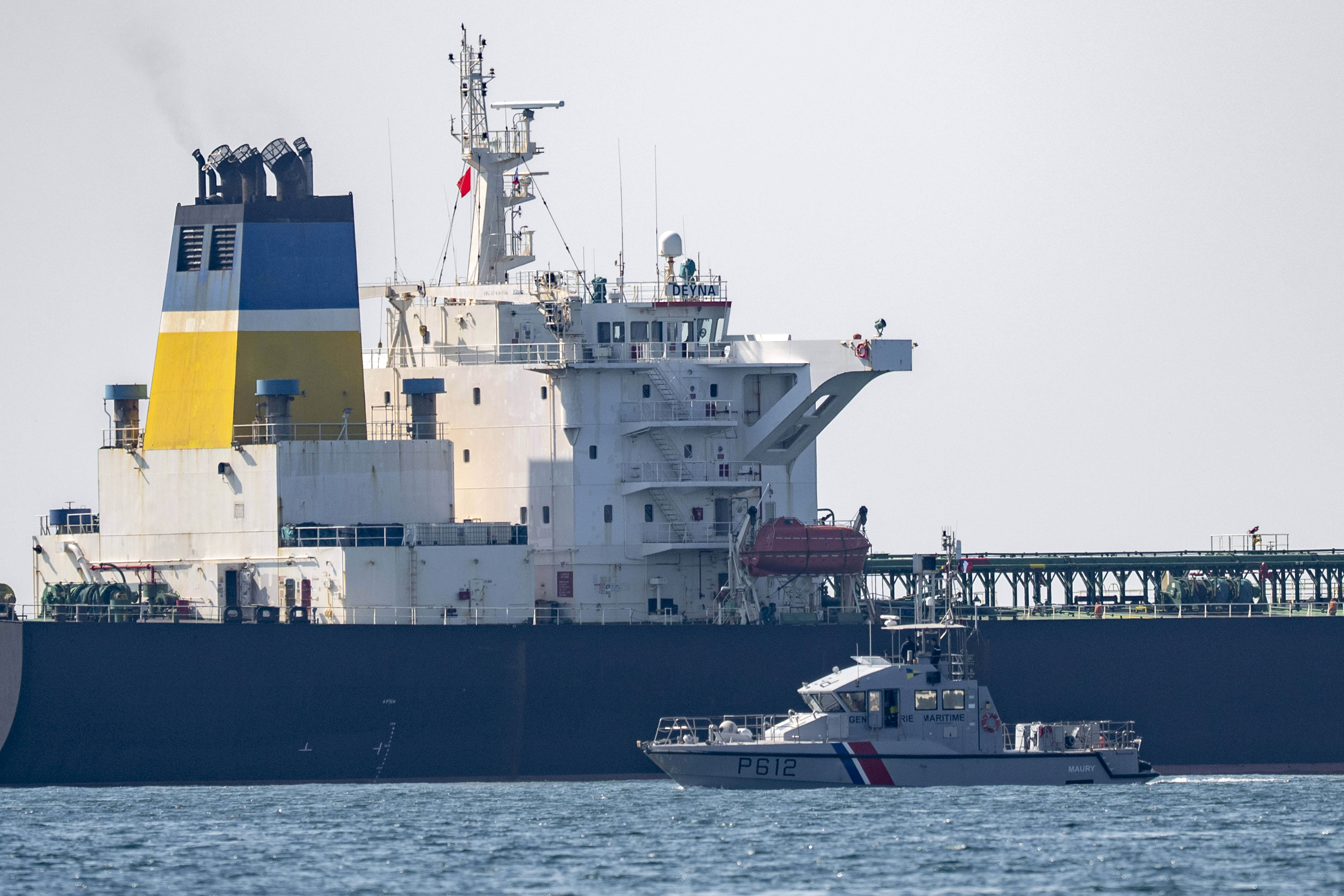
Yet the data show persistent gaps in coverage for many oil tankers. Let me pick an example. Take the Roma, an oil tanker whose International Maritime Organization number is 9182291 (if you are curious, type “Roma oil tanker 9182291” into Google to check its recent whereabouts). On its voyages between Iran and China, the Roma repeatedly switched off its transponder. Why go dark? To keep enforcement agencies from seeing what it was really doing.
Gaps like those of the Roma led Yiliang Li, Le Xu, Francesco Zanetti, and me to gather the AIS records of every crude oil tanker in the world. There are fewer than one might guess: about 2,160. A modern tanker is so large that the world gets by with few of them. Our records follow each tanker on every voyage from January 2017 to December 2023, and we are now adding months through 2026 (and the war with Iran). We also looked up each tanker in the Lloyd’s List registry, which provides its age, flag, and idle-trip ratio, among other details.
All told, we have about 330 million records. No human being could hope to read them, but machine learning makes short work of them. We comb the records for anomalies of navigation and for gaps in AIS coverage. Our guide is the list of deceptive practices set down by the US government in its maritime sanctions advisory of May 2020.
One example, among several in the paper, illustrates the idea. An oil tanker is sailing in the Persian Gulf. As the tanker nears a port of doubtful reputation, its AIS signal falls silent. Sometime later, the signal returns, and the tanker is sailing away. Figure 1, borrowed from our paper, shows the sort of pattern we are after.
Figure 1: Oil tanker approaching a suspicious port with a long AIS data gap
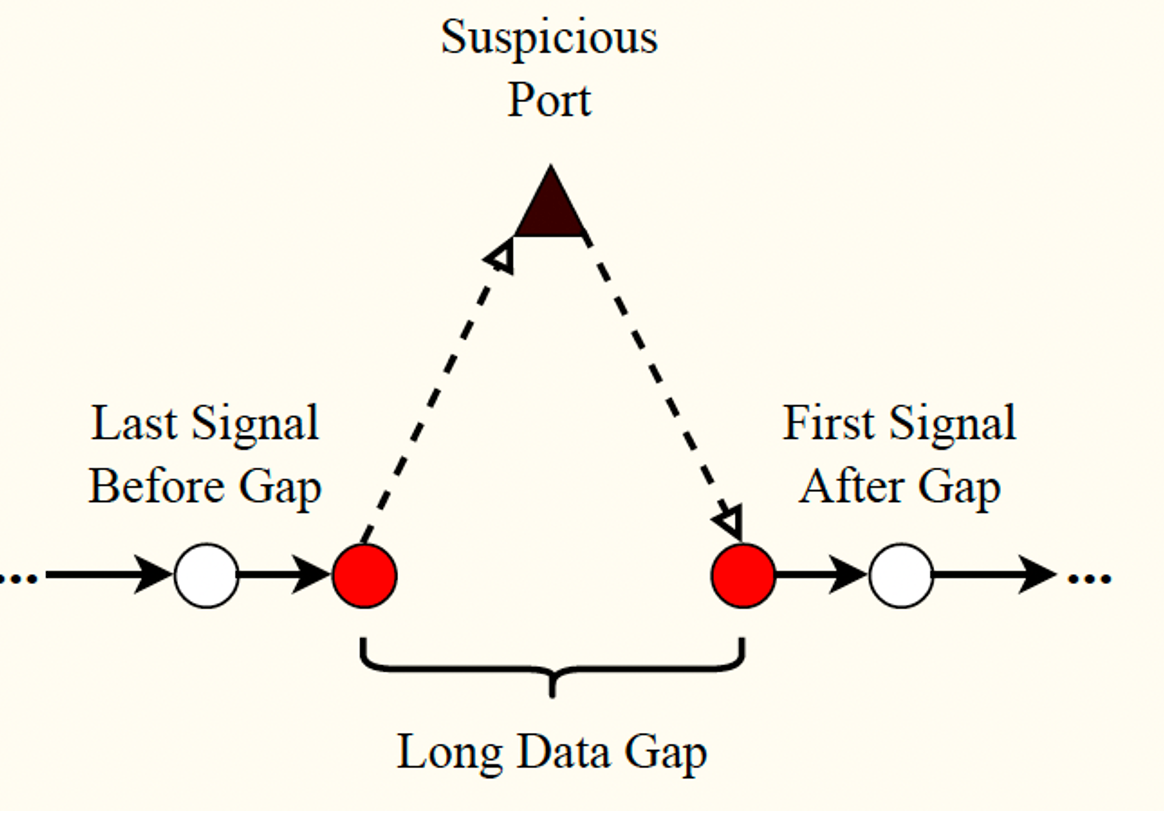
Next, our algorithm works out where the tanker was bound when its signal stopped. An oil tanker is no speedboat: It turns slowly and in a wide arc, and so we can tell which port the tanker was making for. We then buy a satellite photograph of that port. Such photographs are available for nearly any corner of the globe, and at a modest price. This is how we caught the Roma loading crude at Kharg Island, the main terminal for Iran’s crude exports, on August 20, 2022.
We repeat this exercise for every voyage and flag every location where something irregular happens: trips to suspicious ports, ship-to-ship transfers during AIS gaps, and kinetic anomalies. A bit of computer work and you are done.
The results are striking. Of the roughly 2,160 crude oil tankers worldwide, about 560 engage in these practices at least once a year, and their activity responds sharply to sanctions: some tankers switch in and out of sanctions-busting depending on oil prices and the discount on sanctioned oil.
We cross-checked these results against external sources, but the best test was one we never planned. On July 30, 2025, after we submitted the paper to an academic journal, the US Department of State designated fourteen tankers for this conduct. Our paper had already named twelve of the fourteen as dark ships. What about the remaining two? No referee can settle the matter. We may have been right about those two tankers, and the State Department may have been wrong.
We know every voyage of every tanker and how much each tanker can carry. Nobody risks violating sanctions with a tanker half empty, so we can estimate how much oil moved in the dark. The resulting time series places dark-shipped oil at about 43 percent of the world’s recorded seaborne crude exports. The figure is astonishing, but not unreasonable. Russia and Iran are no small players in the oil market, and both have every incentive to perfect the art of evasion.
Evaders get better with practice
We know more than the volume of dark oil. We also know where each cargo is loaded and where it lands, so we can map the dark oil trade. Take Russian oil. Where does it go? A large share goes to China, which, it should be remembered, has imposed no sanctions on Russia. Another large share ends up in South Korea, via blending.
How does this work? A tanker carries sanctioned oil to a third country, where a refinery blends it with local crude of a similar grade. Contrary to popular belief, oil is not a homogeneous good. It comes in many varieties, and a refinery is built to handle only a few of them. The oil that arrived as a fugitive then leaves the third country as a respectable citizen, bearing a clean certificate of origin. South Korean refiners do not know they are buying sanctioned oil: the blending has concealed its origin.
Yet the flows as a whole obey economic logic. Students of international trade will recognize the gravity equation: Bilateral trade flows between two countries rise with the economic size of both countries and fall with the trade frictions between them, mostly distance. An estimate of the gravity equation for sanctioned oil fits remarkably well. Trade theory holds for illicit trade as well.
The paper’s conclusion is plain: We have imposed a great many sanctions, but they have not worked well. Why the United States and its allies have not enforced the sanctions with more vigor is a separate matter. Our paper offers some conjectures, based on the effects of oil sanctions on the global supply chain and the need to keep voters behind the sanctions (which would be hard if sanctions really curtailed oil exports and generated inflation).
Here, it suffices to say that a strongly worded statement rarely stops a tanker.
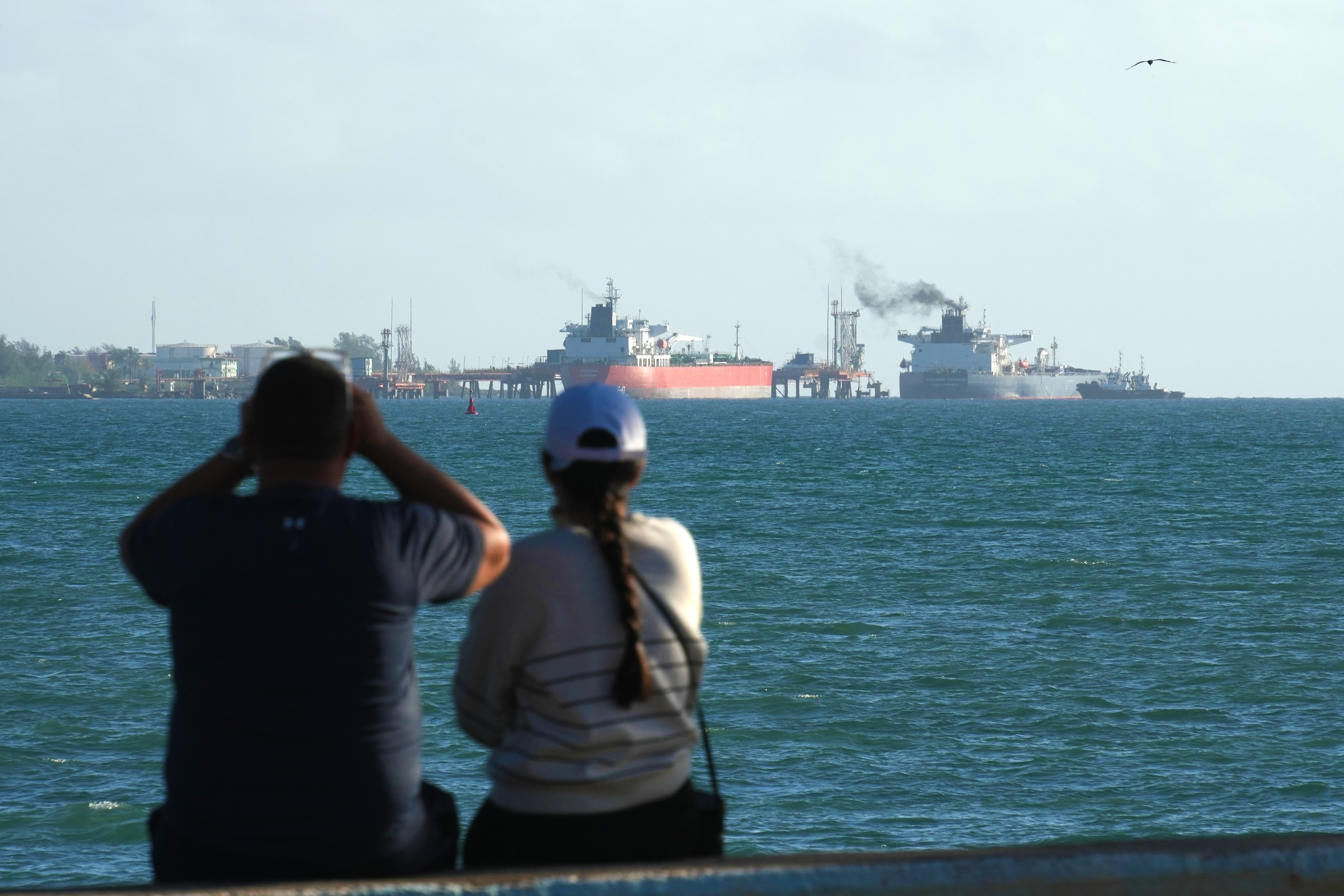
The dark fleet teaches one more lesson: Sanctions lose force with use. Evasion is a trade, and those who ply it improve with practice. Take the discount on Russian crude. We have no reliable data on that discount, so we asked a few oil traders. None would speak on the record, but they agreed that the discount is smaller today than it was three years ago. Why? The evaders have learned their trade, and they compete with one another. Competition works for bad ends as well as for good ones.
More concerningly, the means of evasion outlast the sanctions that gave them life. The oil tankers, the shell companies, the obliging dealers and banks in third countries, and the payment systems built outside the dollar’s reach do not vanish after the sanctions are lifted. When Russia was sanctioned in 2022, it found a well-developed structure for evading sanctions because Iran had completed much of the groundwork.
Sanctions are in this respect like antibiotics: Every dose leaves the bacteria that survive it more resistant, and every sanction we impose wears down our power to impose the next one.
When empty gestures fail
None of this means that we should lock sanctions away for fear of wearing them out. A doctor who never prescribes an antibiotic will breed no resistant bacteria. He will not keep many patients, either. The question is one of timing. Every sanction we impose today leaves us with one less sanction to impose tomorrow. So, we need to weigh what we gain now against what we give up later.
Politicians are not famous for this kind of arithmetic. Some enterprising researcher should do it for them: When should we draw the weapon, and when should we leave it in the holster? And sanctions can still play a role in a broader strategy to uphold international law.
David A. Baldwin, in a classic study, outlines three purposes sanctions can serve.
First, sanctions can make bad behavior more costly. The evidence I cited above suggests that sanctions do not change behavior after the fact. However, few studies have examined whether the threat of sanctions deters bad behavior before the fact (and it is hard to gauge that deterrent effect beyond a few case studies).
Second, sanctions can deny an adversary the technology and revenue it would otherwise have enjoyed. This channel, too, has proved hard to measure in the data, but I suspect it matters.
Third, sanctions can signal resolve to friend and foe alike, a key factor in international relations.
But even with these three purposes in mind, sanctions should be part of a multipronged strategy that combines them with diplomacy, credible military deterrence, and support for the people who resist the sanctioned regime from within. Sanctions alone cannot carry out that strategy. Politicians like sanctions because they cost little at home and look tough, and that is precisely the temptation to resist. The point I want to emphasize is that we must accept that a firmer stand is often required.
History shows that making a regime poorer is seldom enough to change its conduct, and persuading its rulers that they are losing a dispute or that a conflict is hopeless is not enough either. Sanctions must also alter the calculations of the people who count within the regime, and hardly any economic instrument can accomplish that goal on its own. Even in the most cited example of successful sanctions, South Africa’s apartheid regime responded more to the end of the Cold War than to economic pressures and the internal dynamics within the white minority.
At the end of the day, it is very hard to bend bad actors to our will. The lesson is sobering, perhaps even disappointing. But Clio, the muse of history, is not a tidy housekeeper, and she does not leave us the neat remedies we would like. Sanctions are, more often than not, just consolations.
[1] This article draws on my remarks “Sanctions and the Art of Evasion,” presented at the Jackson Hole Economic Policy Symposium “Financial Innovation: Implications for Payments and Policy” on August 29, 2026. It summarizes the main argument of those remarks, but it also departs from them in several places and adds material that I did not cover there.
Jesús Fernández-Villaverde is the Howard Marks Presidential Professor of Economics at the University of Pennsylvania, where he directs the Penn Initiative for the Study of Markets, and a senior scholar at the American Enterprise Institute. He is editor in chief of the IMF Economic Review, a member of the National Bureau of Economic Research, and a fellow of the Econometric Society. He previously held appointments at Harvard, Princeton, Yale, Columbia, Duke, and New York University, and was a national fellow at the Hoover Institution.